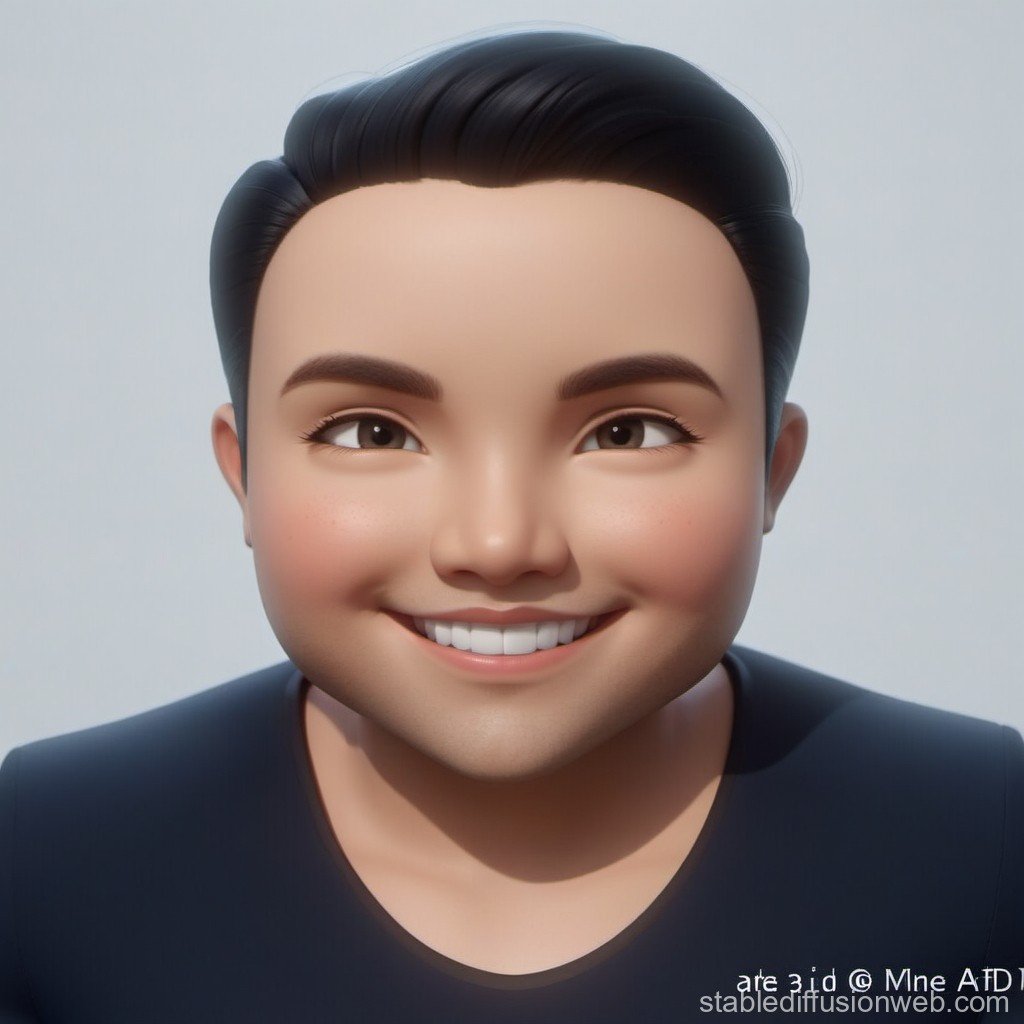
The world of creative design is undergoing a seismic shift, and at its epicenter lies a revolutionary tool: the cartoon character generator. For decades, bringing characters to life—whether for animation, games, comics, or marketing—demanded specialized artistic skill, significant time, and often, a team of talented individuals. Today, artificial intelligence has fundamentally reshaped this landscape, empowering creators of all stripes to conjure detailed, unique characters with unprecedented speed and accessibility. From seasoned animators seeking a creative spark to indie game developers bootstrapping their projects and marketers crafting compelling campaigns, understanding cartoon character generators is no longer a niche skill but a vital asset in the modern creative toolkit.
At a Glance: Your AI Character Design Toolkit
- Speed & Efficiency: Generate unique, high-quality characters in minutes, not days or weeks.
- Accessibility: Create detailed characters without extensive artistic training or expensive software.
- Creative Control: Customize everything from facial expressions and outfits to poses and speaking styles.
- Versatility: Design characters for games, animations, films, marketing, social media, and more.
- Consistency: Maintain a character's look and feel across multiple scenes or iterations using reference tools.
- Style Diversity: Explore styles from realistic 3D and anime to classic cartoons and abstract art.
- Iteration & Experimentation: Rapidly test different concepts and visual approaches for characters.
- Cost-Effective: Reduce reliance on external artists for initial concepts or even final designs.
The Dawn of a New Creative Era: What Are AI Character Generators?
At their core, AI character generators are sophisticated software tools that leverage artificial intelligence, primarily machine learning models like Generative Adversarial Networks (GANs) or diffusion models, to produce visual representations of characters. You provide input—a text description, a reference image, or a selection of parameters—and the AI creates a character based on its vast training data and algorithms. Think of it as having an incredibly fast, endlessly patient artist at your fingertips, capable of interpreting your vision and delivering diverse artistic interpretations.
These tools aren't just about drawing; they're about accelerating the entire creative pipeline. They allow you to rapidly prototype ideas, visualize concepts that might otherwise remain abstract, and iterate on designs with remarkable agility. This newfound power democratizes character creation, inviting a broader range of storytellers and designers to bring their imaginative worlds into existence.
Beyond the Blank Canvas: How AI Fuels Character Design
The magic behind these generators lies in their ability to learn and synthesize. AI models are trained on colossal datasets of images, recognizing patterns, styles, and features across countless characters, artworks, and photographs. When you type "a grumpy wizard with a long white beard and a pointed hat," the AI doesn't just pull up a stock image; it synthesizes elements it has learned from thousands of grumpy faces, wizard beards, and pointed hats, combining them into a novel, unique image.
Different generators employ various approaches to achieve this:
- Text-to-Image Prompts: The most common method. You describe your character in detail, and the AI renders it. The more specific and descriptive your prompt, the better the output.
- Image-to-Image Transformations: You upload a reference image (e.g., a sketch, a photo, or another character), and the AI transforms or stylizes it based on your instructions or a chosen style.
- Parameter-Based Customization: Some tools offer sliders, toggles, and dropdowns for specific attributes like gender, age, hair color, clothing style, facial expression, and pose, giving you granular control.
- Character Reference (Cref) & Weight (Cref_W): Advanced models allow you to upload a base character image and then generate new images of that same character in different poses, expressions, or settings, maintaining visual consistency—a game-changer for narrative projects.
- "Crossbreeding" or Blending: Tools like Artbreeder allow you to combine elements from existing images or "parent" characters to generate entirely new ones, offering a unique avenue for stylistic exploration.
This blend of intelligent generation and user-driven customization empowers creators to go from concept to compelling visual faster than ever before.
The Game-Changing Benefits for Every Creator
Whether you're a professional studio or a hobbyist, AI character generators offer tangible advantages:
For Artists & Illustrators: Augmenting Creativity, Not Replacing It
Instead of spending hours on initial concept sketches, artists can use AI to generate dozens of variations in minutes, helping them explore different styles, poses, and details. This frees up their time for refinement, intricate details, and the unique artistic flourishes that only a human can provide. It's a powerful brainstorming partner, helping to overcome creative blocks and expand visual possibilities.
For Writers & Storytellers: Visualizing Your Narrative
Writers can finally see their characters come to life, allowing them to better understand their appearance, expressions, and even how they might interact with their environment. This immediate visualization can deepen character development, inspire new plot points, and aid in pitch documents or storyboarding. Imagine quickly generating a visual for every character in your next novel.
For Game Developers & Animators: Rapid Prototyping & Consistency
Game developers can prototype character models and assets at an astonishing pace, testing different aesthetics before committing resources to full 3D modeling. For animators, maintaining character consistency across countless frames has always been a challenge; tools with character reference capabilities ensure that your protagonist looks the same whether they're angry, happy, or jumping over a chasm. This significantly cuts down production time and costs. Indeed, AI in game development is quickly becoming a foundational element.
For Marketers & Businesses: Engaging Visuals On Demand
Creating compelling visuals for marketing campaigns, social media, or branding can be expensive and time-consuming. AI character generators offer a quick, cost-effective way to generate unique avatars, mascots, or illustrative characters that resonate with specific target audiences, personalize content, and boost engagement.
A Deep Dive into Leading AI Character Generators
The market is flourishing with diverse tools, each offering its own strengths. Here's a closer look at some of the most prominent players:
The All-Rounders: Versatility and Ease of Use
Many platforms aim to provide a comprehensive character creation experience, often integrating with broader design suites.
- Fotor AI Character Generator: This versatile tool shines in its ability to create unique, high-quality characters from both text and uploaded images. It supports a wide array of styles—anime, cartoon, 3D, fantasy, realistic—and integrates seamlessly with Fotor’s powerful photo editing suite, allowing for fine-tuning of features, clothing, and poses. It's an excellent choice for those who need a full creative canvas.
- Picsart AI Character Generator: A free, online option perfect for quick, detailed digital characters without requiring prior artistic skills. By simply typing a descriptive prompt, you can generate characters in styles from realistic 8K to artistic illustrations or anime. Picsart's extensive suite of filters and photo editors further enhances customization, making it ideal for marketing or personalized avatars.
- Canva AI Character Generator: Integrated within Canva’s popular design suite, this intuitive tool allows you to create high-quality characters from text descriptions. It offers diverse styles like anime, cartoon, and realistic human characters, with options for hairstyles, expressions, and clothing. The real power here is its seamless integration with Canva’s vast library of templates and editing features, allowing you to drop generated characters directly into your designs.
- FlexClip AI Character Generator: With an intuitive interface that requires no professional design skills, FlexClip makes custom character creation quick and easy. It supports various art styles, including cyberpunk, cartoon, 3D, and fantasy, and allows for customization of colors, effects, and background removal. It's a strong contender for those seeking high-quality designs and other AI art forms.
For Consistency & Narrative: Keeping Your Characters "On Model"
For projects requiring a consistent character across many different scenes or interactions, specialized tools become invaluable.
- Midjourney: While known for its incredible general image generation capabilities, Midjourney truly excels for character consistency with its
--cref(character reference) parameter. This allows you to provide a reference image of your character and generate new images that retain their unique look across various poses and expressions, critical for any narrative project. The--cw(character weight) parameter further fine-tunes how much the AI adheres to the reference. - Stable Diffusion: An open-source powerhouse, Stable Diffusion offers unparalleled control for creating highly realistic and diverse characters. By crafting detailed text prompts and utilizing in-painting techniques, different samplers, and settings, you can generate consistent characters across multiple images. Its open-source nature means a vibrant community and endless customization options, often integrating with other AI tools for enhanced design.
- Leonardo AI: This platform is specifically designed for generating consistent characters with ease. Its Character Reference tool lets you upload a single image to ensure your character's distinct look and feel are maintained across multiple generated images. Supporting diverse styles from photorealistic to stylized, Leonardo AI allows customizable prompts for granular details and smooth integration into existing creative workflows.
For Animation & Dynamic Characters: Bringing Them to Life
When your characters need to move, speak, and emote, some tools offer advanced features.
- LTX Studio AI Character Generator: This tool truly transforms character creation by focusing on design, animation, and personalization without traditional casting. It offers full creative control, allowing customization of outfits, settings, expressions, and speaking styles. The browser-based tool provides seamless editing with automatic updates across storyboards, supports creation from scratch, text prompts, or reference images, and includes "Face Switch" for unique avatars. Its lifelike animation, face motion capture, and lip-sync capabilities make it ideal for dynamic storytelling. For those looking to quickly create our cartoon movie character generator is an excellent starting point.
- BasedLabs AI Character Generator: Designed to bring characters to life, BasedLabs enables users to describe personality, appearance, and skills to generate unique characters instantly. It boasts extensive customization options for gender, appearance, poses, and emotions. Complementary features like custom background integration and environment generation make it highly versatile for games, animations, films, and diverse storytelling projects.
The Blending Innovator: Unique Composition
One tool stands out for its unique approach to character generation through combination.
- Artbreeder: Utilizing advanced machine learning algorithms (BigGAN and StyleGAN), Artbreeder excels at "crossbreeding" character portraits. Its intuitive interface lets you search, select, and combine "parent" images, then fine-tune facial features, expressions, and styles. This tool is exceptional for generating characters across diverse categories, from human portraits to fantasy creatures, and fosters a collaborative community. It’s a fantastic way to explore designing truly unique characters through unexpected combinations.
Choosing Your AI Character Generator: A Decision Framework
With so many powerful options, how do you pick the right one? Consider these factors:
- Your Primary Goal:
- Quick Concepts/Brainstorming: Fotor, Picsart, FlexClip, Canva.
- Consistent Characters for Narrative: Midjourney, Stable Diffusion, Leonardo AI.
- Animated/Dynamic Characters: LTX Studio, BasedLabs.
- Experimental Blending/Unique Styles: Artbreeder.
- Required Output Style: Do you need realistic, anime, cartoon, 3D, or fantasy? Most tools offer a range, but some excel in specific areas.
- Level of Control & Customization: Do you prefer simple text prompts, or do you need granular control over every facial feature, pose, and clothing item? Stable Diffusion, with its open-source nature, offers the most profound control for advanced users, while platforms like Fotor or BasedLabs provide extensive parameter-based options.
- Integration with Existing Workflows: If you already use Canva for design or Fotor for photo editing, their integrated generators offer seamless continuity.
- Budget: Many tools offer free tiers or trials, but advanced features and higher generation limits often come with a subscription. Picsart offers a robust free online tool, for example.
- Ease of Use: If you're a beginner, an intuitive interface like FlexClip or Canva might be preferable. More advanced tools like Midjourney (accessed via Discord) or Stable Diffusion (requiring local setup or specific interfaces) have a steeper learning curve but offer greater power.
Mastering the Craft: Best Practices for AI Character Generation
Simply typing a prompt isn't enough to get truly exceptional results. Here's how to become a power user:
Crafting the Perfect Prompt: The Art of Description
- Be Specific: Don't just say "a wizard." Say "a wise, ancient wizard with a long silver beard, wearing a flowing, midnight-blue robe adorned with glowing arcane symbols, holding a gnarled staff topped with a crystal orb."
- Describe Style: Specify "in the style of a Pixar character," "anime art style," "realistic photograph," "digital painting," or "retro cartoon."
- Detail Emotions & Poses: "A joyous elf skipping through a sunlit forest," or "a determined warrior standing defiantly on a rocky outcrop."
- Use Keywords for Quality: Terms like "highly detailed," "8K," "cinematic," "vibrant colors," "studio lighting" can significantly enhance output quality.
- Experiment with Negative Prompts: Many advanced tools allow you to specify what you don't want (e.g., "ugly, deformed, blurry, extra limbs") to refine results.
Iteration is Your Ally
Don't expect perfection on the first try. Generate multiple variations, pick the best ones, and refine your prompts based on what you like and dislike. AI character generation is a dialogue, not a monologue.
Leverage Character Reference Tools
For storytelling, consistent character design is paramount. Utilize features like Midjourney's --cref or Leonardo AI's Character Reference to ensure your characters maintain their identity across different scenes and contexts. This is crucial for any narrative project, whether it's an animated short or a graphic novel.
Post-Processing & Refinement
AI-generated characters are fantastic starting points, but they often benefit from human touch-ups. Use image editing software (or integrated tools like Fotor and Picsart's editors) to clean up minor imperfections, adjust colors, or add unique details that make the character truly your own.
Common Questions and Misconceptions
"Will AI replace human artists?"
This is a frequent concern, but the consensus among industry experts is that AI is an augmentation tool, not a replacement. AI excels at generating variations and handling repetitive tasks, freeing human artists to focus on high-level creative direction, emotional nuance, complex storytelling, and the unique artistic vision that only a human can provide. Think of it as a super-powered assistant rather than a competitor. The future of animation, for instance, will likely involve a symbiotic relationship between human creativity and AI efficiency, opening up the future of animation with AI to new possibilities.
"Are AI-generated characters truly original?"
Yes, in the sense that the AI synthesizes new images from its training data rather than copying existing ones. While elements might be inspired by patterns it has learned, the final output is a unique combination. The debate around originality often ties into copyright law, which is still evolving for AI-generated art, but the output itself is a novel composition.
"Is it ethical to use AI for character generation?"
The ethics of AI art are a complex and ongoing discussion. Key considerations include:
- Training Data: Was the AI trained on ethically sourced data?
- Attribution: How should credit be attributed when AI is used?
- Fair Use: The legal implications of using AI-generated content.
These are critical questions that creators should consider, and platforms are working to address them, often through transparency regarding training data and ethical guidelines. Engaging with ethical considerations in AI art is vital for responsible creation.
The Horizon: What's Next for AI Character Generators?
The evolution of AI character generation is relentless. We can expect several exciting advancements:
- Increased Realism and Fidelity: Characters will become even more lifelike and detailed, blurring the lines between digital and reality.
- Enhanced Consistency: Tools will improve their ability to maintain character identity across even more complex scenarios and diverse outputs.
- More Intuitive Interfaces: User interfaces will become even more natural and conversational, making character creation accessible to an even wider audience.
- Direct 3D Model Generation: Moving beyond 2D images, AI will increasingly generate fully rigged and textured 3D models directly from prompts, ready for animation or game engines.
- Dynamic Character Development: AI might eventually assist not just with appearance, but also with character backstories, personality traits, and even dialogue, creating truly holistic character packages.
- Personalized Storytelling: Imagine an AI generating characters specifically tailored to your preferences or even adapting them in real-time within interactive narratives.
These advancements underscore that AI art tools for beginners are not just a passing fad but a foundational technology set to continually redefine creative industries.
Your Next Steps in Character Design
Understanding cartoon character generators isn't just about knowing what tools exist; it's about recognizing the paradigm shift they represent. These platforms offer an unparalleled opportunity to accelerate your creative process, explore new artistic directions, and bring your unique visions to life with speed and precision.
Start by experimenting. Choose a tool that aligns with your current needs and skill level—whether it's the seamless integration of Canva, the powerful consistency of Midjourney, or the dynamic animation capabilities of LTX Studio. Play with prompts, explore different styles, and don't be afraid to iterate. The more you engage with these tools, the more you'll unlock their potential and discover how they can become an indispensable part of your creative journey. The blank canvas is no longer daunting; with AI character generators, it's an invitation to an infinite realm of possibility.